
On Not Staying Quiet
Reflections on trauma, momentum, and the refusal of silence.

Content note: This essay includes references to a fatal train crash, post-traumatic stress disorder (PTSD), and the long-term effects of trauma. Please read with care.
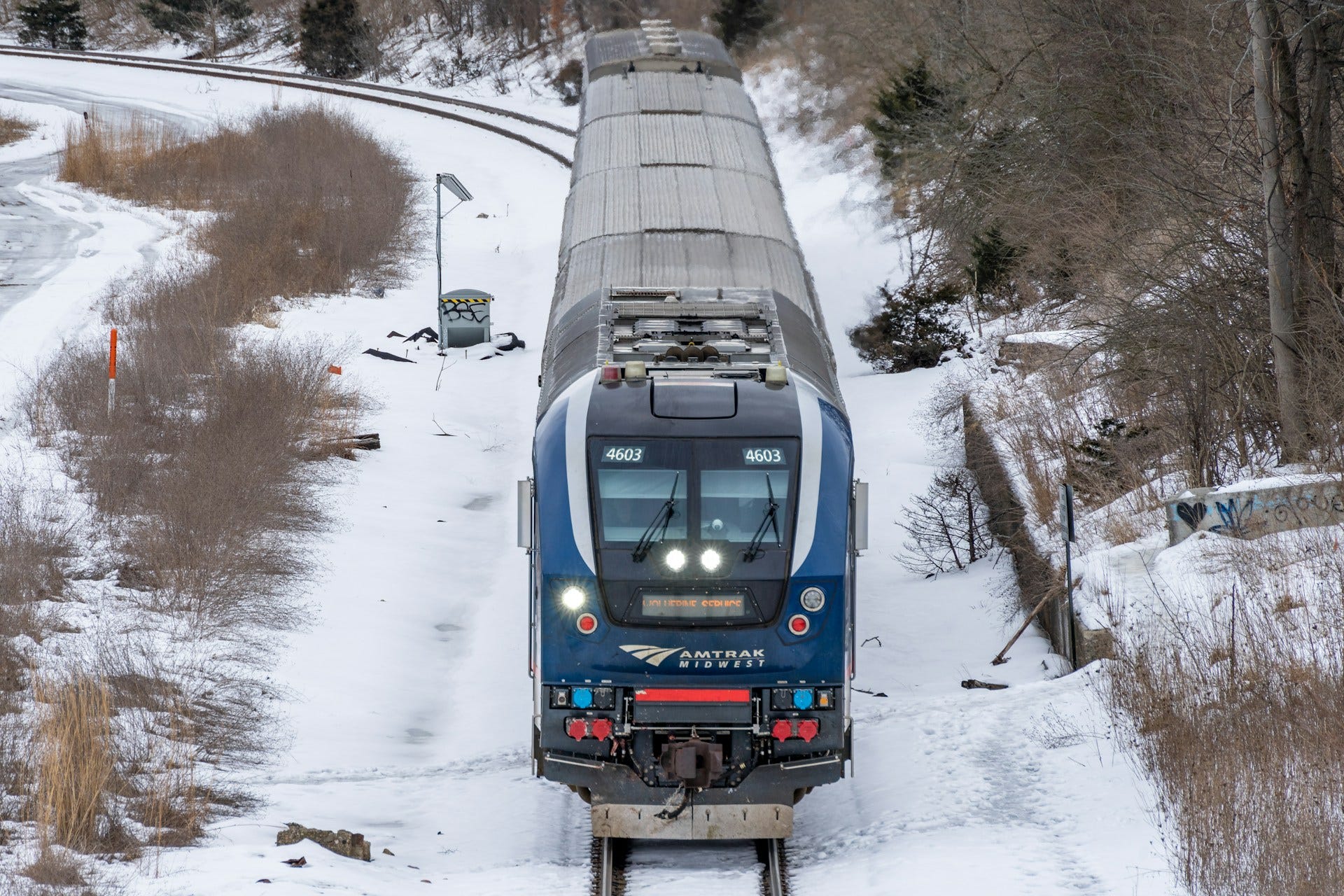
Impact
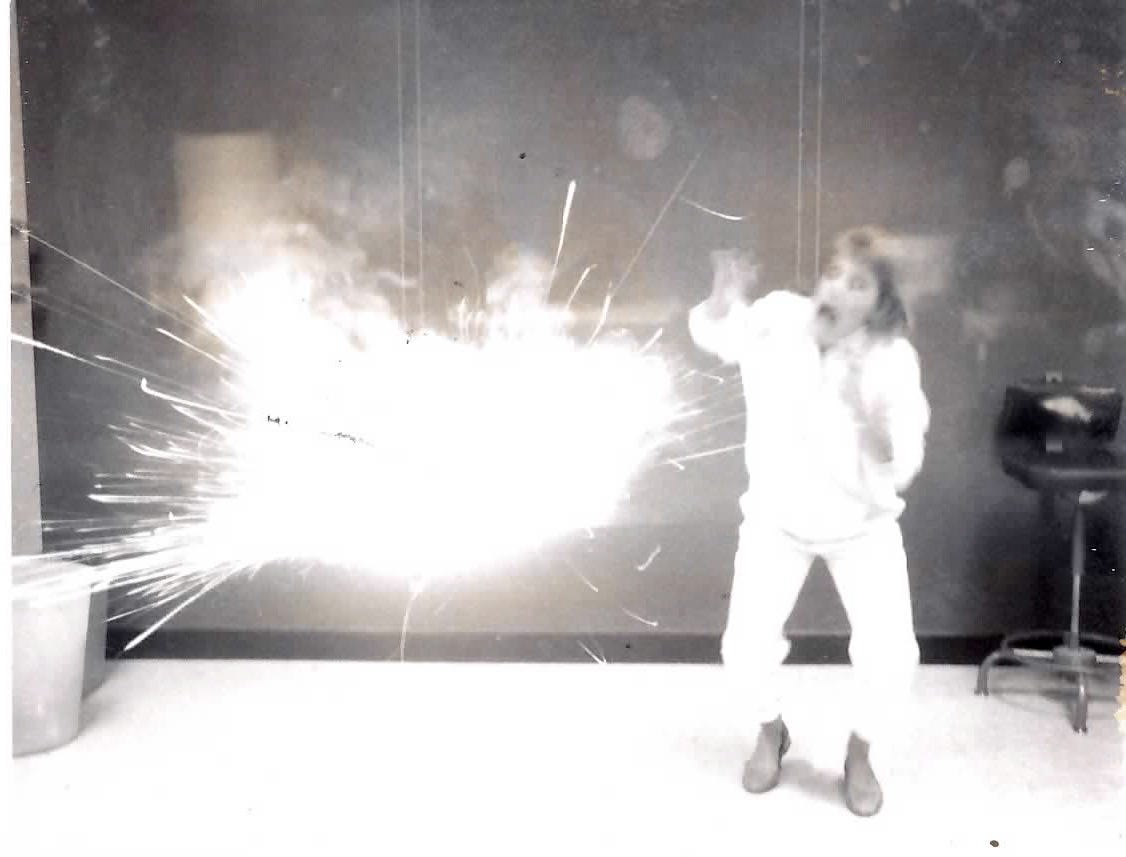
In March of 1993, I was on an Amtrak train going 60 mph that rammed into a propane truck after it slid through an icy intersection.
The explosion was felt for miles. Windows shattered in nearby homes and businesses.
One person — the truck’s driver, Nicholas Bakhuyzen — was killed. Many others were injured, some severely, including the train’s engineer, James Chiles. Witnesses were stunned that the train remained on the tracks.
From my seat inside one of the train’s four cars, there was no way to see what was coming. No time to brace. Just motion, then impact, then my life flashing past my eyes—followed by the surreal knowledge that I was still alive.
Then came the PTSD—which went unnamed and unaddressed for decades.
In my mind, I’d survived. Case closed
But my body told a different story.
Memories returned without warning: flames blasting through the car, muffled screams—including my own—the panicked rush toward the door. I became consumed with trying to understand what had happened that day.
In the nearly thirty-three years since, I’ve worked hard to learn, to process, and to heal.
When Silence Is Framed as Safety
Recently, someone who knows me and my story questioned why I keep writing publicly about my traumas.
Then, they reached for a familiar move: mentioning that someone else they know had also expressed concern about how openly I write about my life.
Their words weren’t cruel on the surface, but they carried something sharper underneath — judgment, disbelief, distaste, and an unmistakable tone of Well, we would never…
The implication was clear:
That I’m unwise.
Too much.
Not like them.
That there’s something improper —even indulgent? — about living this openly.
For days, those comments clawed into my psyche. I knew they were meant to make me doubt myself. To reconsider my voice and return to quiet on behalf of others.
As a deeply feeling, highly sensitive person, I’ve typically carried guilt after veiled reprimands like this.
But this time—after all the work I’ve done, the research I’ve read, the people I’ve learned from, the healing I’ve earned—something shifted.
For the first time in my life, I gave zero fucks.
Momentum
When I responded to these individuals —directly, carefully, gently — I explained that I’ve spent years studying what secrecy does to the body. That unprocessed trauma doesn’t disappear; it lodges itself in muscle, memory, and the nervous system. That writing’s been my lifeline for making meaning of overwhelming experiences.
As I spoke to one person, then later wrote to the other, I kept thinking about that propane truck filled with a thousand gallons of compressed gas sliding toward the train’s engine. I knew these people weren’t trying to harm me. They were reacting to fear—trying desperately to slow something they didn’t understand and couldn’t control.
That train’s engine, already in motion, already committed to a path, absorbed the impact not because of anyone’s ill intent, but because this is how force works when it meets momentum.
I don’t mean this analogy to cast blame or position myself as a victim. It’s a way of understanding how fear shows up—how people we love sometimes mistake silence for safety, believing that if the motion stops, the impact will too.
Years ago, I found some legal papers filed after the crash.
The engineer explained that by the time he saw the truck sliding sideways toward the tracks, physics had already taken over. He sounded the horn. He stayed on course. A train can’t swerve. It can only continue forward, carrying everyone with it.
Later, I spoke with the conductor on our train, who told me how deeply the accusations affected the engineer and how blame followed him long after the wreckage was cleared.
Ripples of impact are often infinite, unfolding slowly over time as we process, reflect, and metabolize what happened.
As I found myself recently defending my right to speak and share my truth, I thought about that engineer.
In my mind, he didn’t do anything wrong. If anything, he moved through an unforeseen collision as steadily as one can when an otherwise ordinary life (whatever that is…) is interrupted by forces no one can control.
Reading those legal papers also stirred a memory I hadn’t thought about in years.
In high school, I was unexpectedly placed in AP Physics—a decision that shocked me. I didn’t consider myself a “physics kid.” The placement wasn’t based on math scores (mine were laughable) or problem sets, but on something far less obvious: aptitude for language. The belief, as it was explained to me, was that students who could track nuance, sequence, and metaphor could also grasp force, momentum, and cause-and-effect. The class was one of the best I’d ever taken, and I was shocked that the lessons came as easily as they did. At the time, I didn’t understand the connection. Now, I do.
Language had trained me to see motion — how one thing collides with another, how pressure builds, how momentum doesn’t disappear just because we wish it would.
What the Body Knows
When I defended myself recently for writing openly about my life, my body reacted in a way I now recognize as PTSD.
Full-body sweats.
A deep chill.
Shaking.
Nausea.
But this time, it felt less like anxiety — and more like a release.
Later, a friend suggested my body might have been purging the last of my obligation to stay silent for other people’s comfort.
Yeah. That feels right.
Where Meaning Emerges
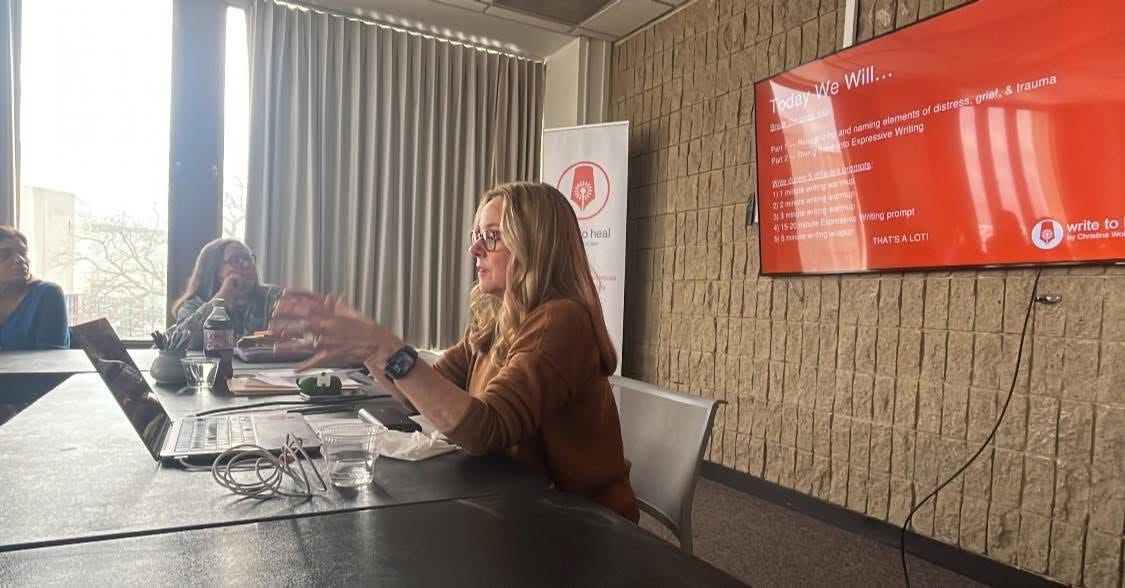
A few days ago, I taught the first session of my 6-week memoir course at Northwestern’s Norris University Center.
The name of the course is Memoir Writing: Training Grounds for the Long Haul.
Students arrived despite a winter weather advisory, with temperatures dropping dangerously low. Some had traveled long distances. All of them came carrying something tender.
As they introduced themselves and their ideas for their memoirs, I heard echoes of my own story in each of theirs, which is exactly what a good memoir does. It tells the story of one life in a way that helps others recognize their own.
I spoke about my own memoir-in-progress — about the four years between losing one sister and discovering another.
When one student asked where it’s best to begin a story, I offered the (somewhat hilarious) acronym I learned from Allison K Williams:
Start at the S.U.C.K.:
Simple.
Unexpected.
Concrete.
Kickoff.
I explained that I don’t plan to begin my own memoir where readers might expect. I begin with the train crash.
Not for spectacle. Not for drama.
I begin there because it’s a metaphor.
From inside that train car, I couldn’t see what lay ahead—just as I couldn’t have foreseen the losses, reckonings, and discoveries that would come later.
A truck sliding on ice.
A life split open.
The only option afterward: keep going.
After I shared this, one tentative student spoke up and shared a past trauma of their own, an event so raw that the room fell into stunned silence.
In that moment, I knew — without doubt — that my survival in 1993 wasn’t random. I knew that I’d been given the chance to go on and hold space for others who know the devastation of sudden impact.
Call it corny or woo-woo, but our classroom felt sacred.
That night, I felt steadier than I ever have about openly sharing my past. I wasn’t revisiting trauma just to dwell in it. I wasn’t being performative or attention-seeking. I was standing in a place where my trauma had been integrated.
How had I arrived there? By returning. By refusing erasure. By doing the very thing I’d been warned not to do — going there, again and again, until meaning emerged.
I must acknowledge my privilege here. I’ve had access to trauma therapy, friends, loved ones, and an extraordinary writing community. The reason I can now hold space for others is not because I’ve “moved on” or that I can “compartmentalize” better than others, but because I’ve learned how to weave the language of my experiences into my life.
I did this stepping toward the very things that have hurt me and upset my existence, writing about them and eventually sharing what I’ve learned.
On Not Staying Quiet
Some will never be comfortable with this approach, and they may assume I’m “broadcasting” my trauma.
They’re misunderstanding the point.
I’m telling the truth. My truth. And sometimes, the truth is painful.
It’s not our responsibility to stay silent for other people’s comfort.
I choose every day to speak honestly about my life.
If that makes others uncomfortable, they’re free to look away.
I will not.

Come along as my memoir finds its path. When you do, you’re also helping others.
Paid subscribers get occasional sneak peeks from my memoir-in-progress, plus behind-the-scenes reflections on craft, trauma integration, and the making of this work. Your name will also be featured on the SUPPORTERS page of my published memoir.
Most importantly, your paid subscription helps me offer Expressive Writing for Emotional Healing workshops free or at scholarship rates.
If this resonates, I’d love to welcome you as a paid subscriber.
No matter what, I thank you for being here.


Please continue to keep speaking up and speaking out ❤️❤️
Thank you for sharing so eloquently - and refusing to be silenced, again, again and again. Your voice truly helps heal others. Tuning out the noise of other people's projected fear and judgement is key - editing the address book is so liberating! The Near-Death Experience club is sacred - and by invitation only. Keep writing, sharing, thriving!